Bottom-up processing is a type of information processing in which stimuli are processed in a sequential manner from bottom to top. The process begins with tiny details, and progresses up to more complicated concepts. This differs from top-down processing, where you form an overall impression and trying to find evidence that supports this notion. Visually processing a street in a city could initially create an impression that it’s chaotic noisy, and full of people. They might be looking for indicators to confirm this idea for example, people pushing past crowds or traffic noise coming in from nearby cars.
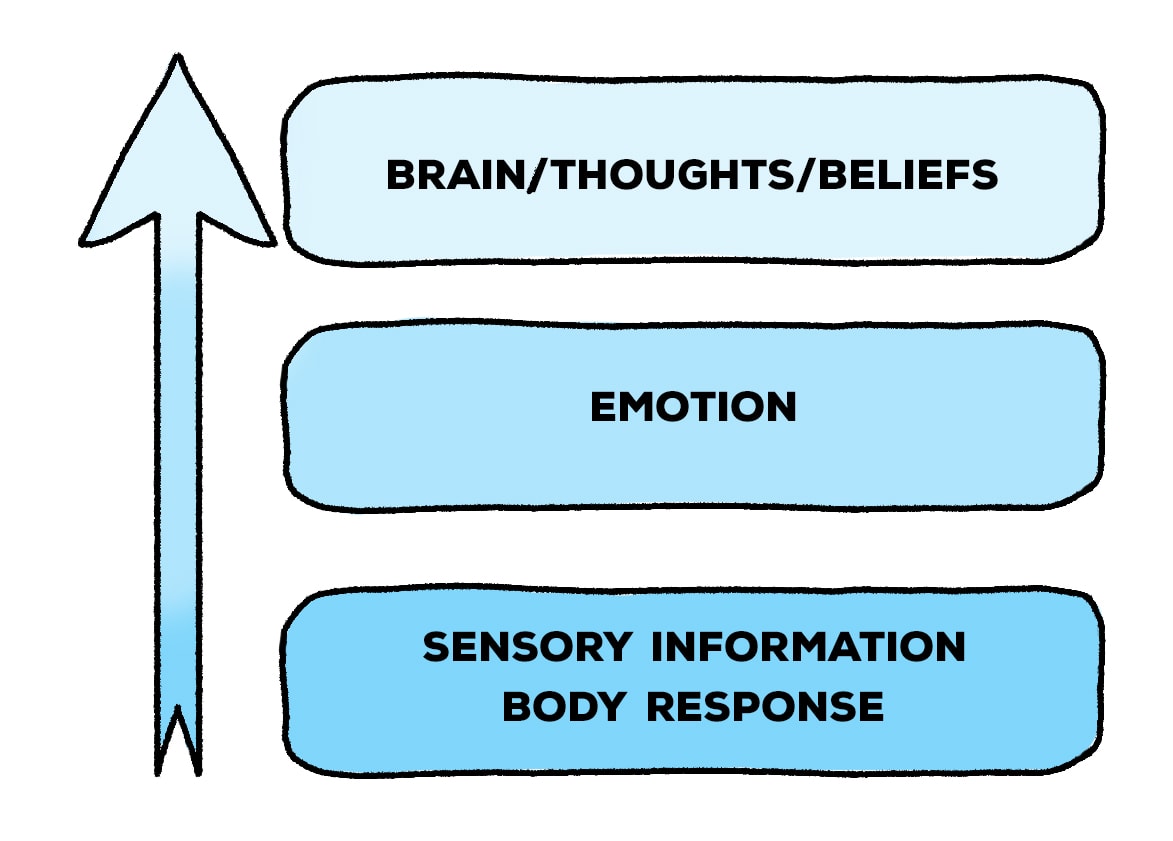
Because bottom-up processes tend to be more data-driven and analytical, it has been widely investigated in relation to specific cognitive taskslike perception and memory. However, it also has the potential to play a key role in other aspects of our lives like creativity or decision-making such as design or art. Bottom-up processing can be applied effectively and efficiently to tackle more complicated problems and gain better insight into these. Bottom-up processing, even though it has been criticized in academic circles, is extremely beneficial in understanding the world around us , as well as our internal workings.
The brain’s intricate circuitry is central to our thinking, actions and decisions. The functions that take place within this complex organ play a crucial part in everything from memory and intelligence to our moods and behavior. Bottom-up processing is one the most significant factors that impact brain functioning. Bottom-up processing is the way information is processed starting with the individual nerve cells as well as moving through interconnected neural pathways. This can eventually impact higher cognitive processes, like attention or perception. Studies have shown that this process has profound effects on processes such as learning and memory. It could also be used to treat disorders like schizophrenia or Alzheimer’s disease. The researchers may be able to solve some of these mysteries by understanding the brain’s processes from the bottom up. This will allow us to develop powerful new tools for healthcare and neuroscience.
Bottom-up processing is how data is processed by our brains. Instead of top-down processing which is more focused on integrating expectations and prior knowledge into the process of learning. Bottom-up processing relies on data that is new and unstructured. Through focusing on specific elements in the learning process starting with basic words and sounds to advanced concepts and concepts, bottom-up learning has been proven an extremely efficient method to all learners.
The primary benefit of bottom-up processing is that it allows us to step back and pay attention to every aspect of the information we encounter. This keeps us active and eager to learn new concepts, improve existing ones, and identify opportunities for improvement. To help us better understand the details, we can identify how they are connected through the logical chain and network. Bottom-up processing can help us develop as better learners and effective communicators by engaging in bottom up processing.
For more information, click Bottom up processing